
Dans le Cochon, Tout est Bon
Inside Chef Jason Franey's Whole Pig Breakdown
"In the pig, everything is good." It's an old French saying, but one that still guides Chef Jason Franey's approach to cooking today.
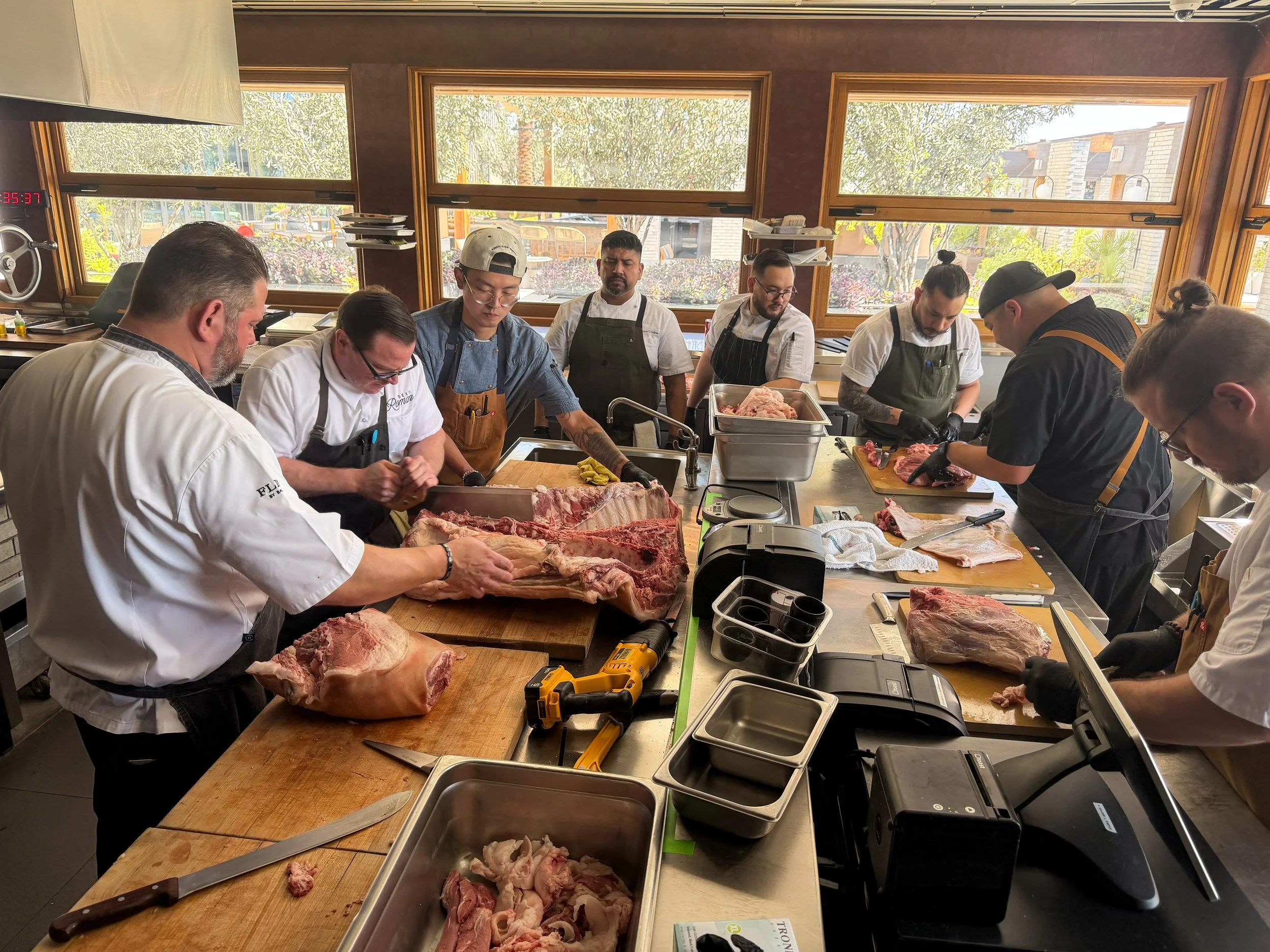
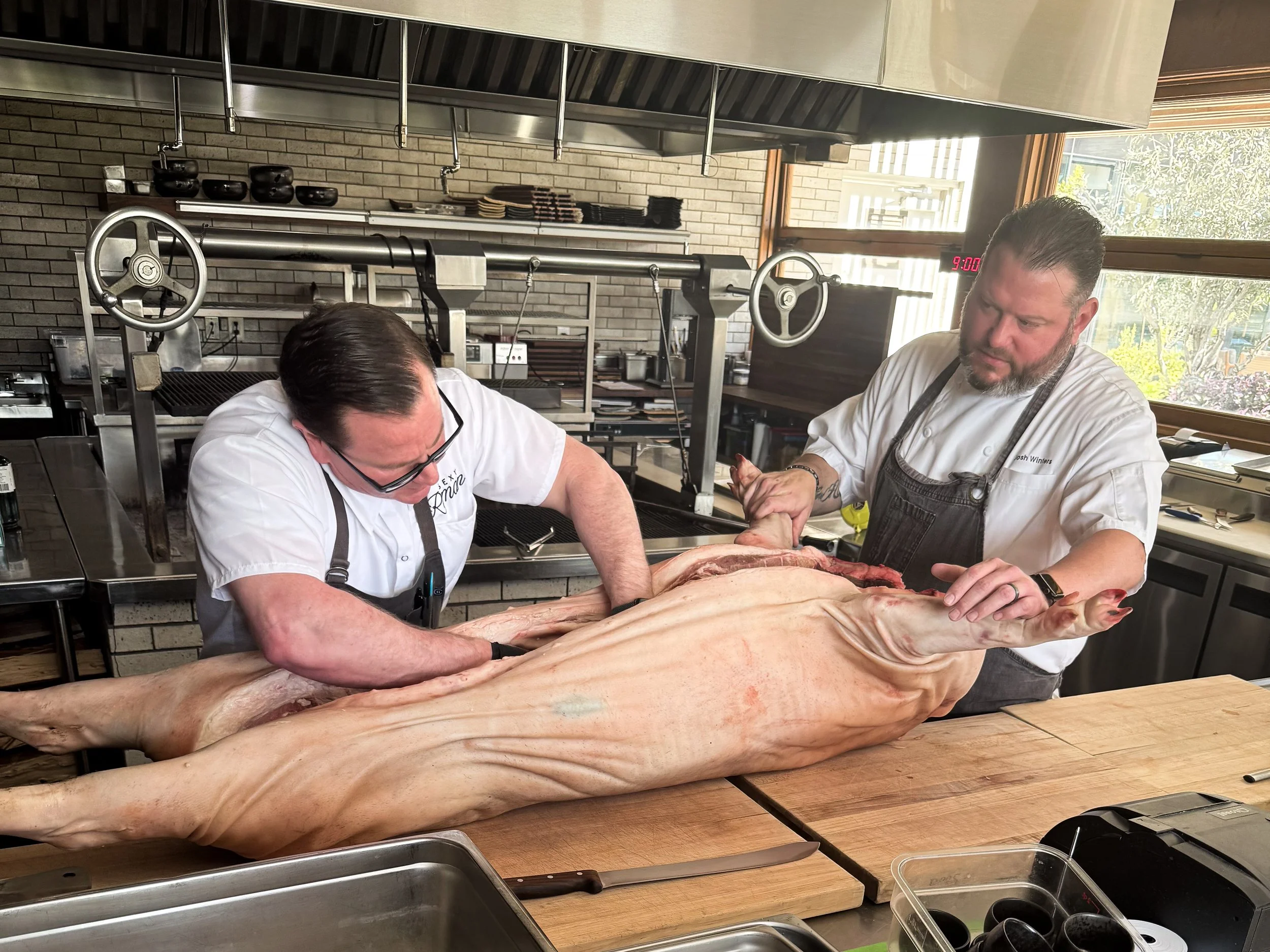
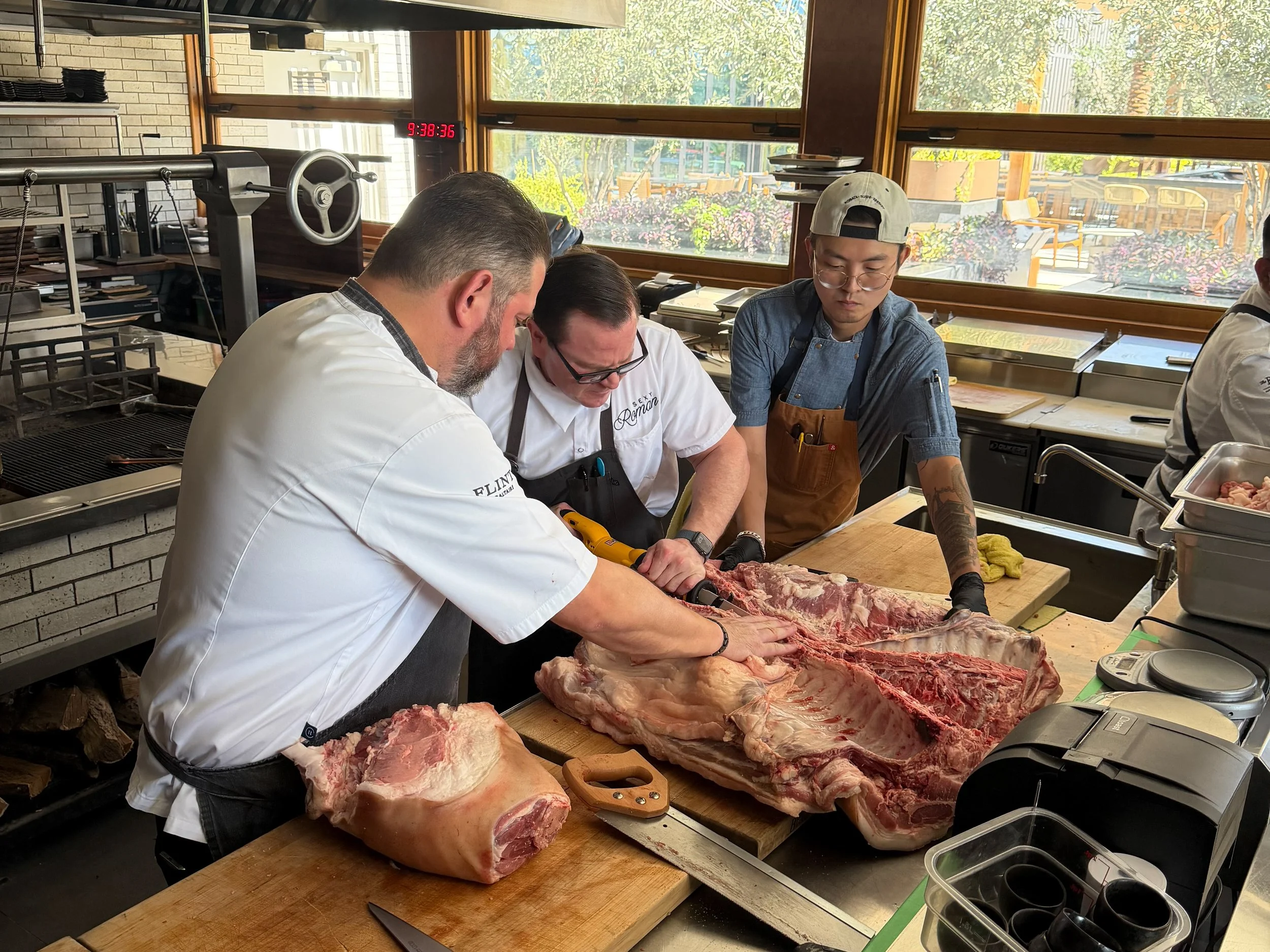
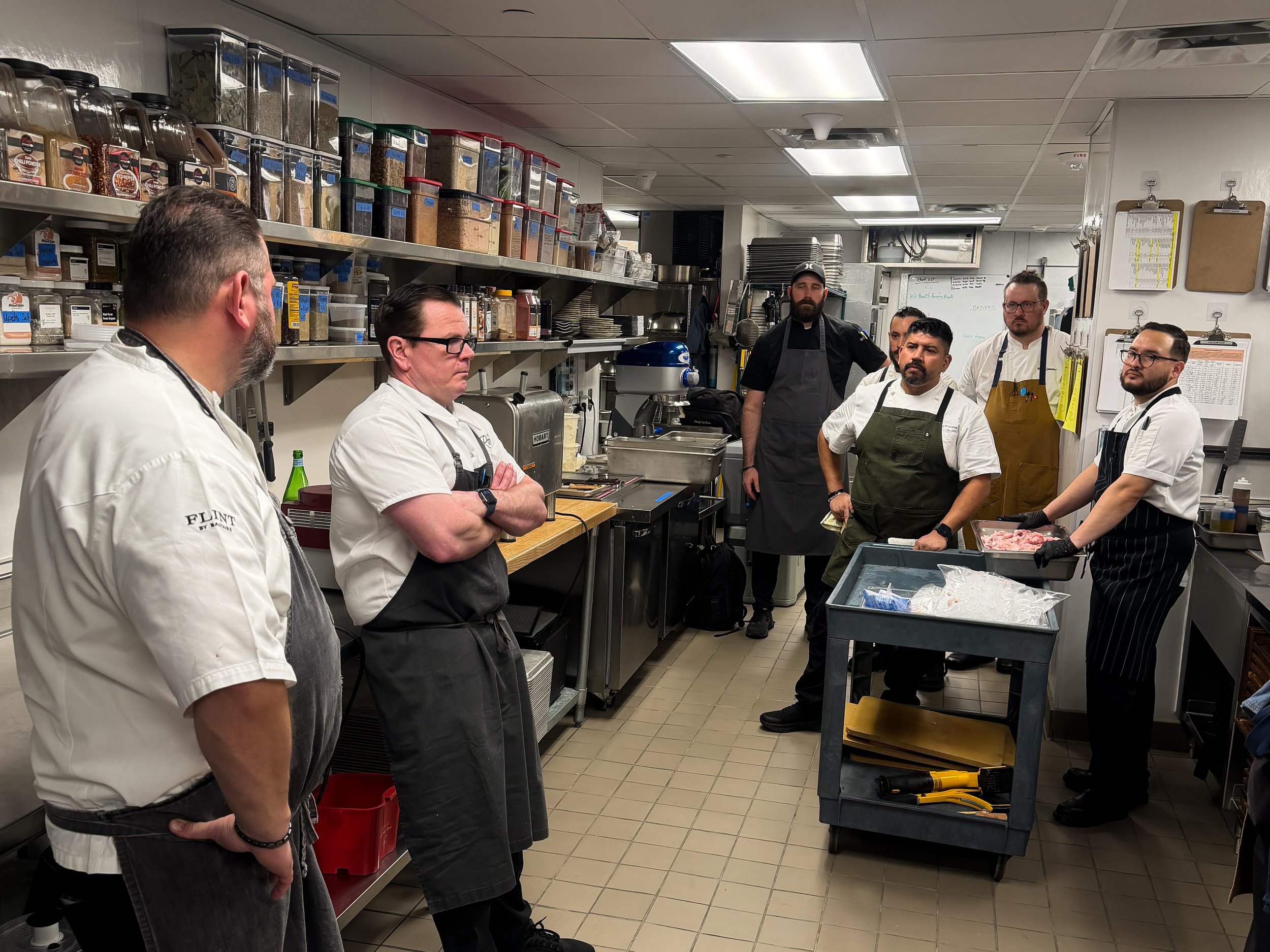
Recently, the team gathered around a whole pig, not for service, but for something much more valuable: education. From prep cooks to chefs and even members of the front-of-house team, everyone participated in breaking down the animal from start to finish, learning not only how each cut is separated, but why understanding the entire animal makes better cooks.
Preserving a Dying Craft
For Franey, the goal wasn't simply to butcher a pig. It was to preserve a culinary tradition that fewer kitchens practice today.
"I wanted to get everyone together in one room to cook, to teach technique, to introduce charcuterie, and to show that nothing should go to waste, from the skin, to the bones, to the head."
Although Chef Jason Franey built his career in fine dining, whole-animal butchery wasn't something he encountered in most professional kitchens.
"When I was coming up as a sous chef, restaurants weren't receiving whole animals because there wasn't much use for the lesser-known cuts," Franey says. "It was something I explored on my own. I became fascinated with charcuterie in the early 2000s and largely taught myself. It's an old craft that really interested me, especially the philosophy of nose-to-tail cooking."
Today's kitchens often receive neatly fabricated cuts, trimmed and portioned before they ever reach the restaurant. While efficient, that convenience can leave cooks disconnected from the ingredients they're preparing.
Understanding the Animal
"There's a reason the tenderloin is the most tender cut, and there's a reason the shoulder is the toughest. You have to understand where those muscles come from, how they work, and where each cut lives. Otherwise, you can easily cut into something that's incredibly valuable."
Beyond proper butchery, each cut offers different textures, flavors, and fat content, requiring different techniques to bring out its best qualities.
Respect Means Using Everything
Ask any chef what it means to "respect the animal," and you'll likely hear a similar answer.
For Franey, it's simple.
"Respecting the animal means not wasting it."
Every edible piece has a purpose.
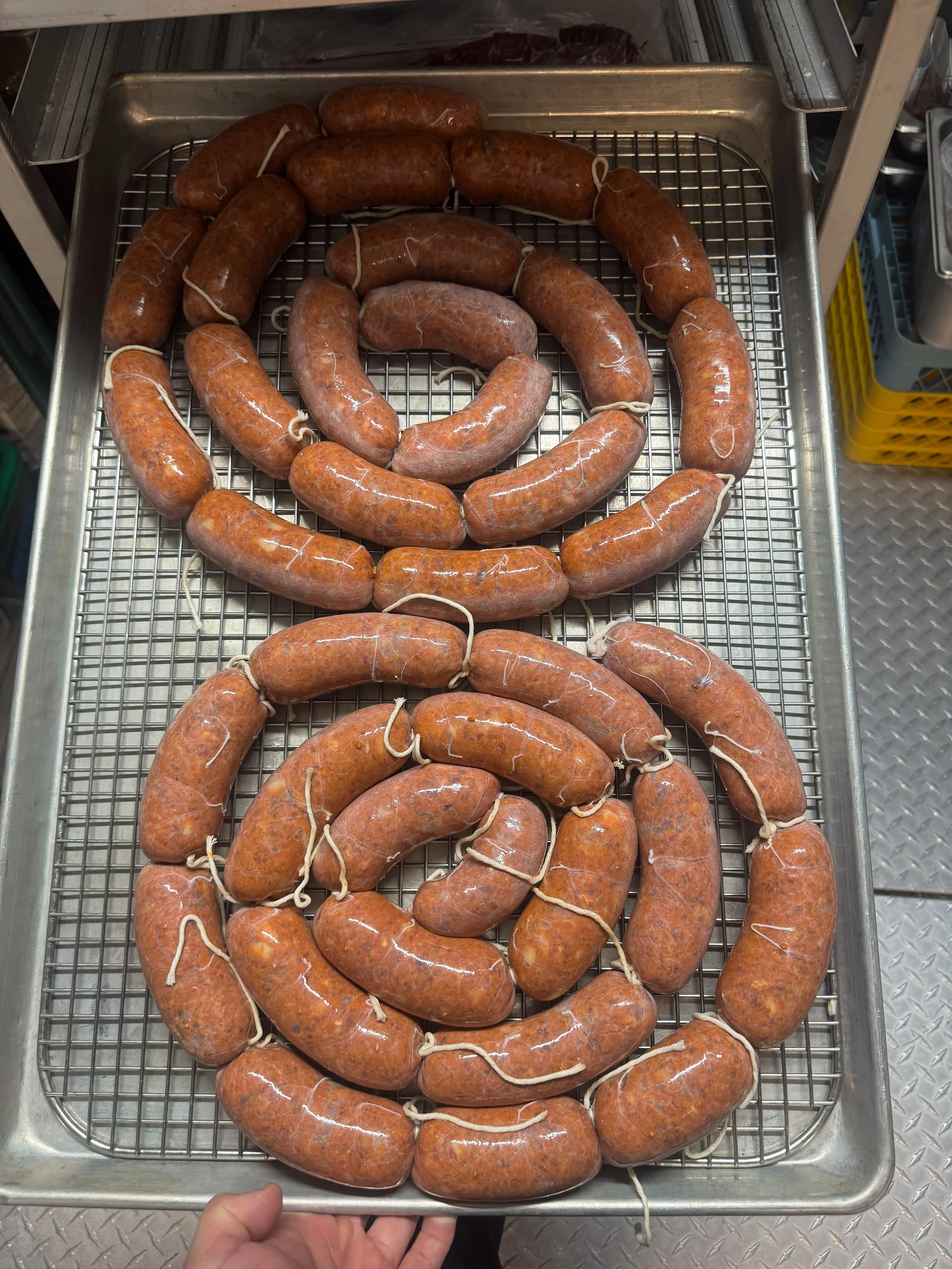
Bones become stock. Tougher muscles become handcrafted sausages. Bellies are cured into pancetta. Back fat becomes lardo. The head is transformed into head cheese. Even the liver, heart, and kidneys were incorporated into sausage.
"If it's edible, we find a use for it."
Nothing is wasted.
Breaking Down the Pig
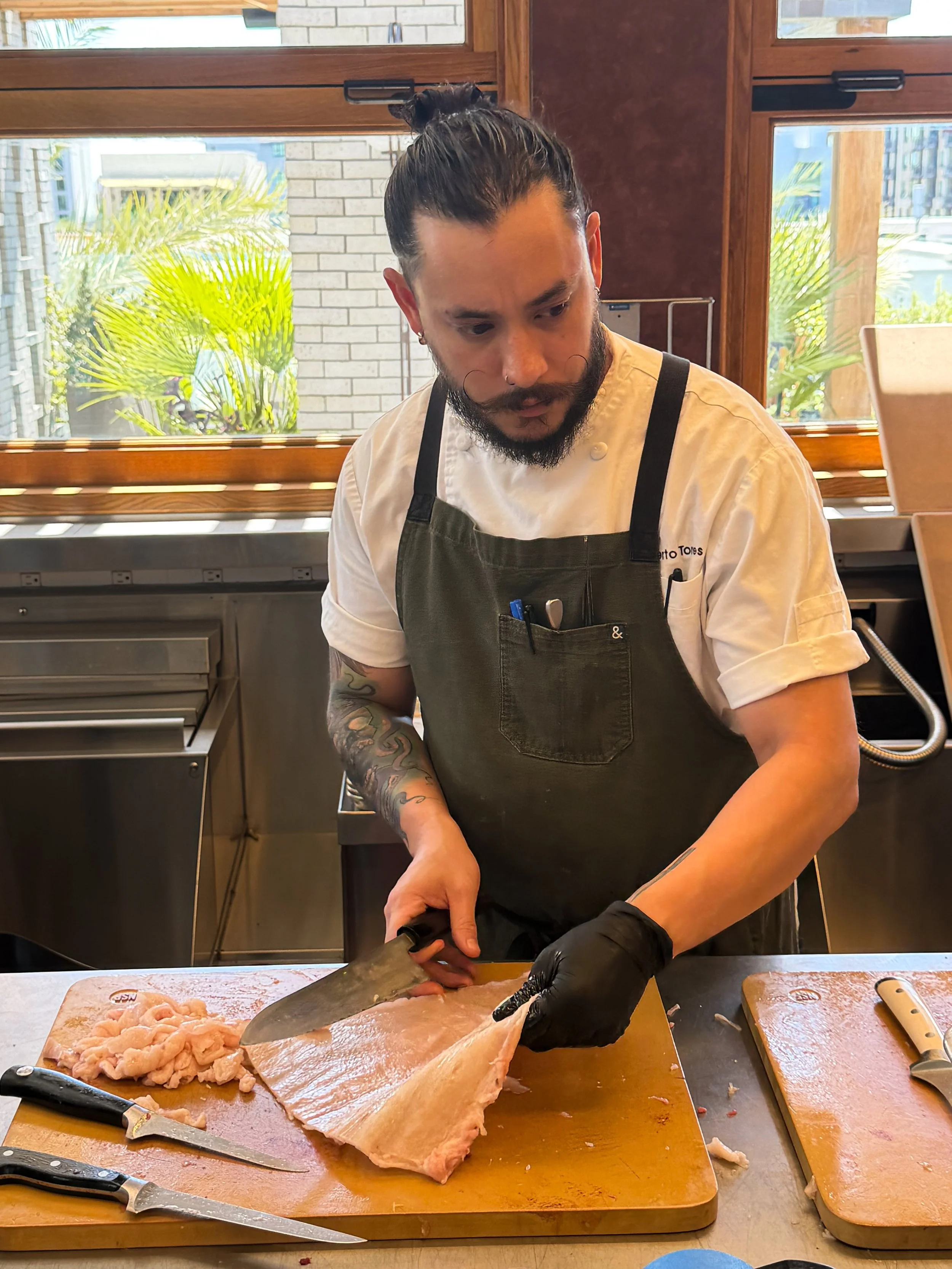
The process began by removing the head before splitting the carcass into two equal sides.
From there, each primal cut was carefully separated and assigned a purpose.
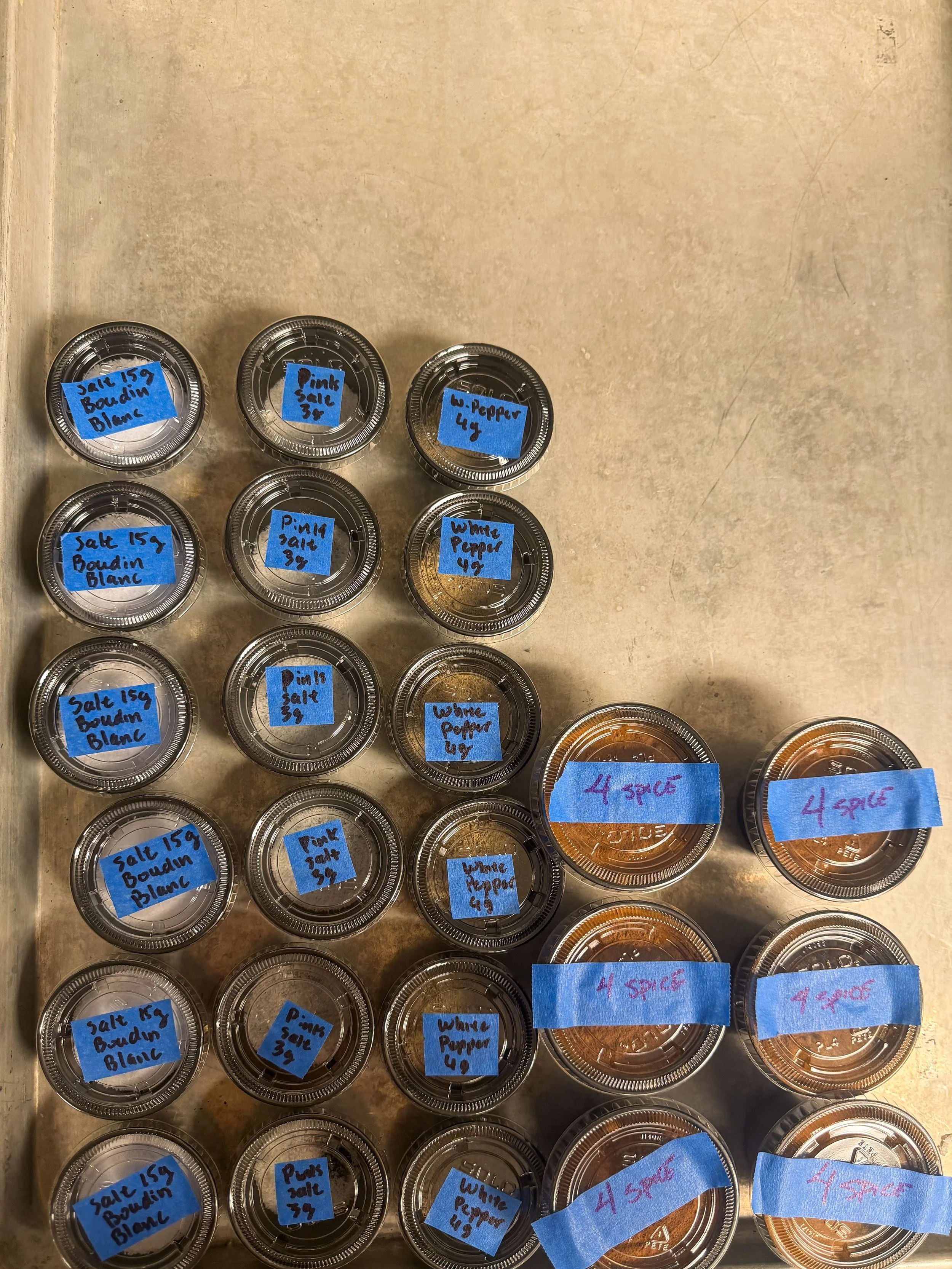
The Boston butt and picnic shoulder became house-made sausages, including boudin blanc, chorizo, and smoked andouille.
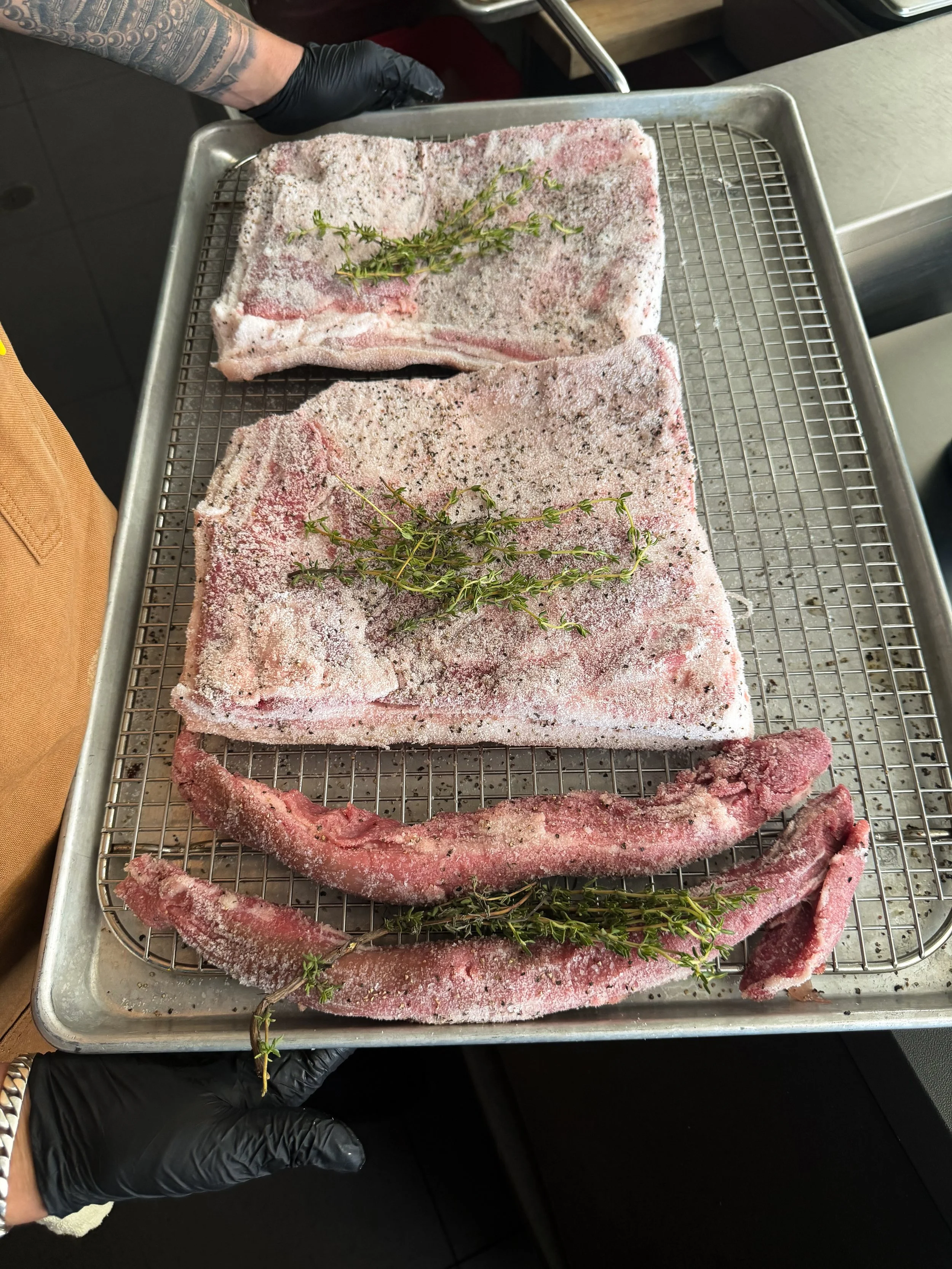
The belly was cured into pancetta while the skin became crisp chicharrón.
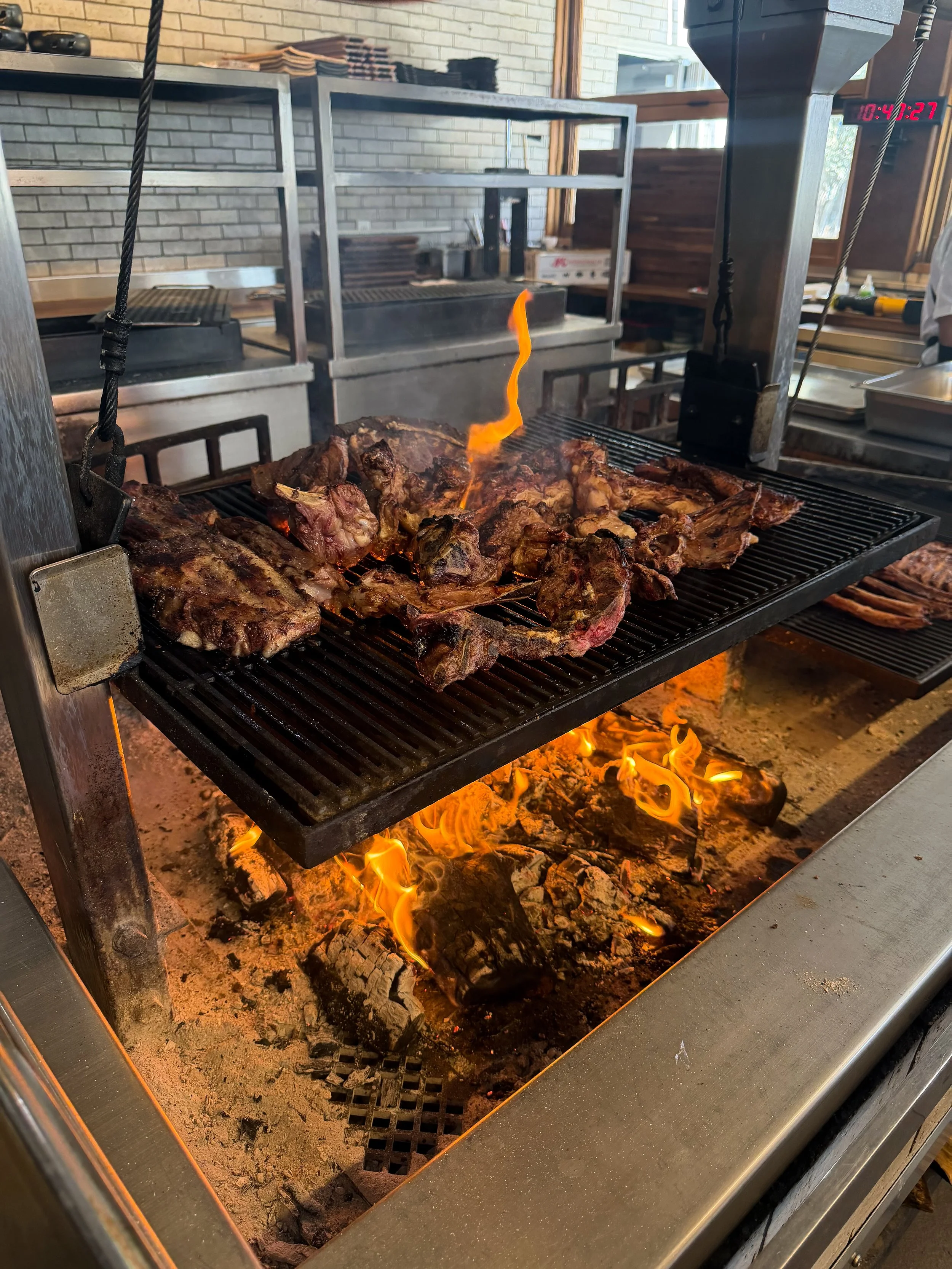
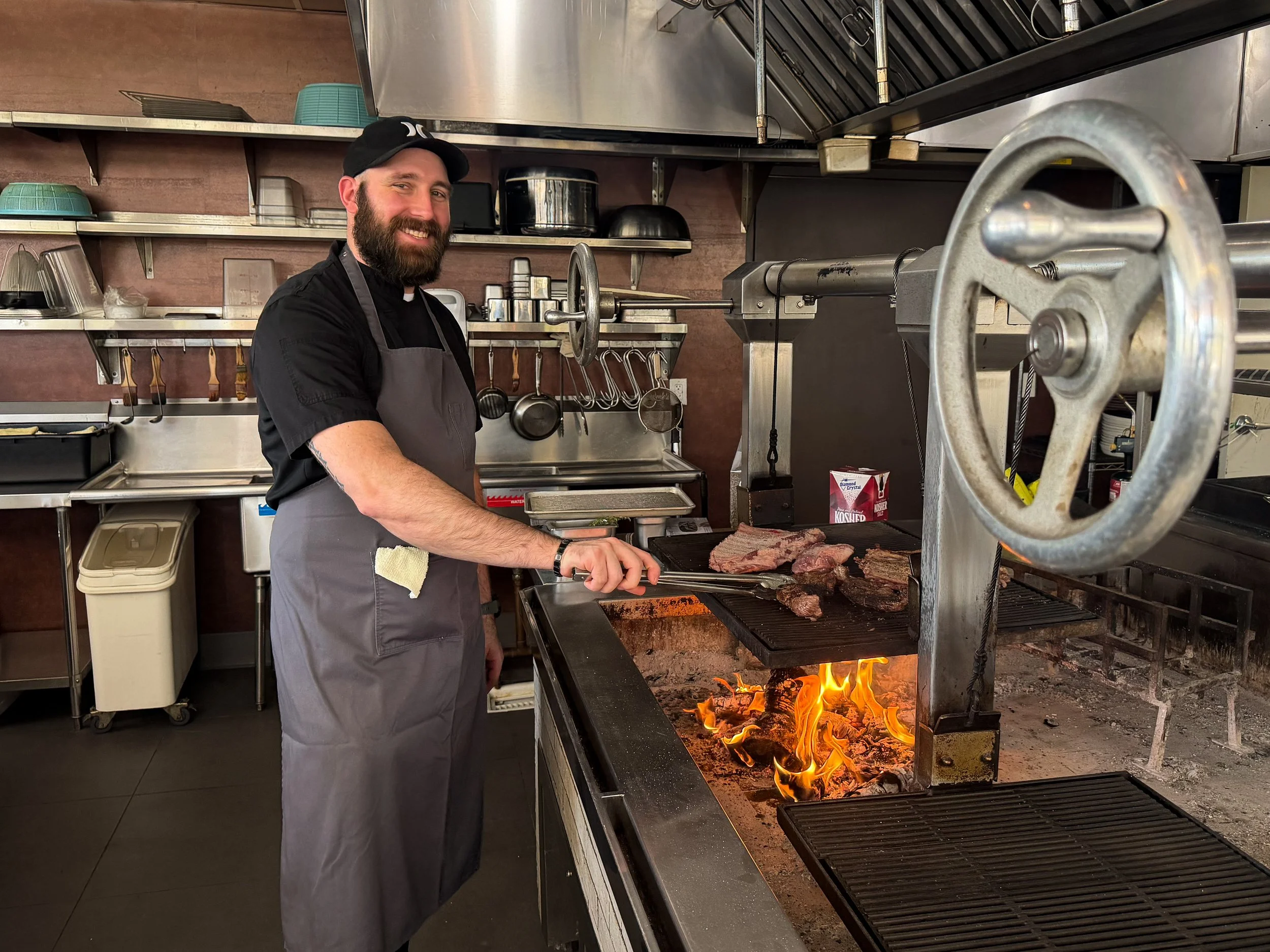
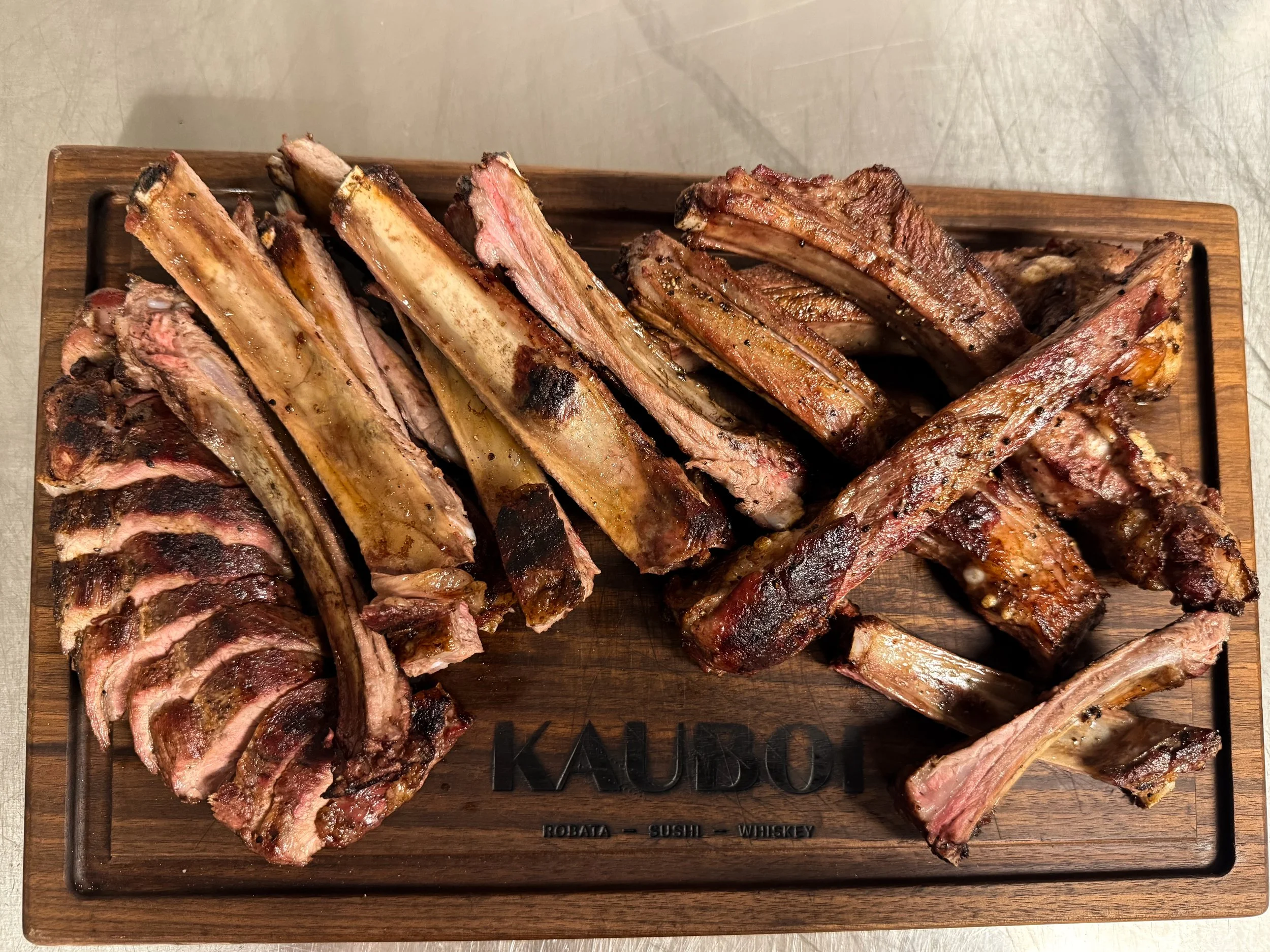
The pork rack is currently dry-aging before appearing as a Kauboi special, while the loin will also age for two weeks before being Frenched, and roasted on our custom wood fired grill.
House-made lardo will be created from the cured back fat.
Even the tenderloins found an unexpected second life.
After curing and smoking them above the fire for five days, they'll be shaved over sushi.
Discovering Hidden Cuts
Most diners recognize pork chops, ribs, and tenderloin.
But Franey enjoys introducing his team to the lesser-known cuts hidden throughout the animal.
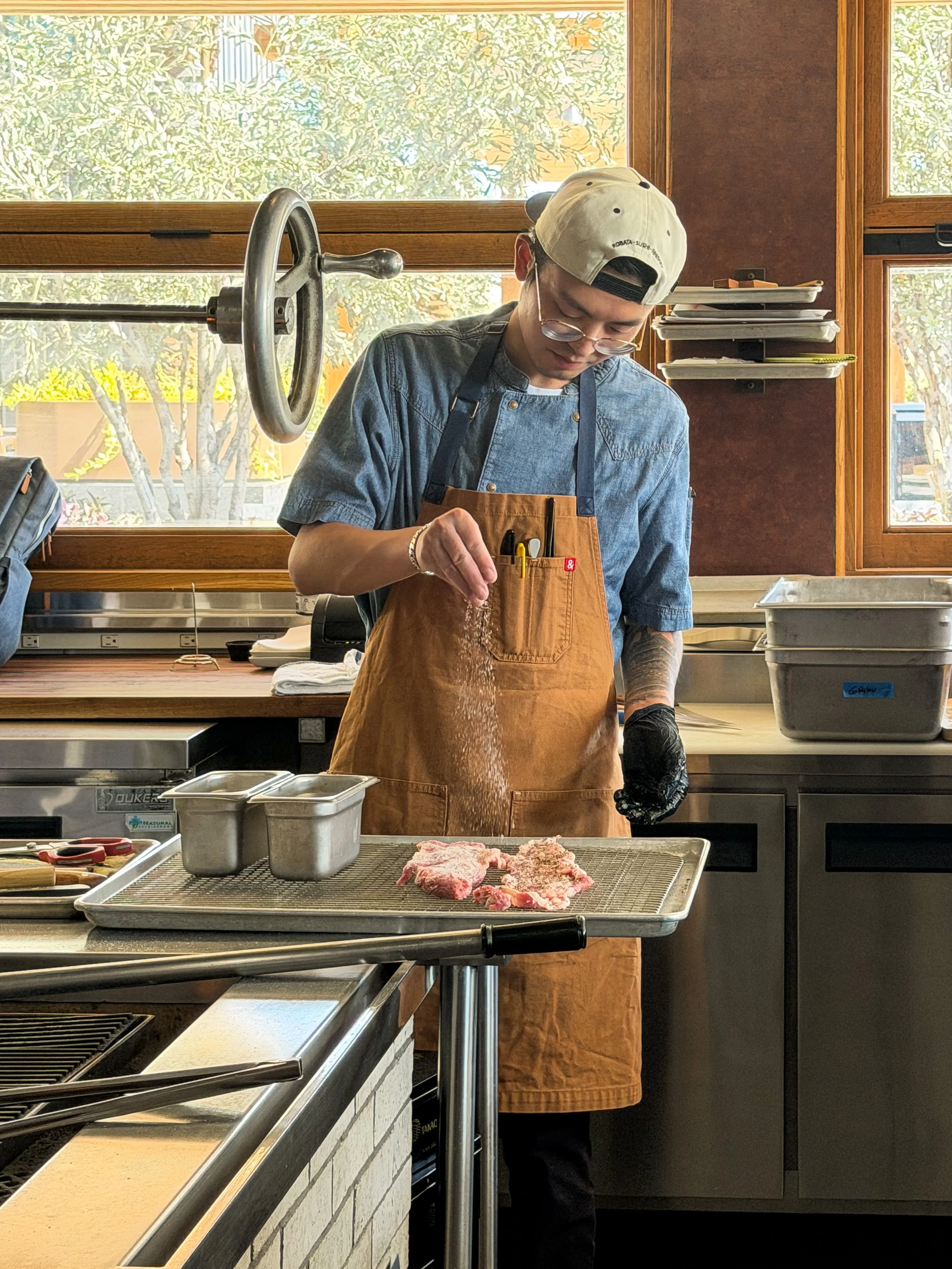
"The Hollywood cuts are what everyone already knows. But then there are cuts like the secreto, the pork skirt steak, and the St. Louis ribs that come off the belly. Seeing exactly where those cuts come from, that's the learning experience."
It all comes back to the French saying that inspired the day.
"Dans le cochon, tout est bon."
Everything on the pig is good.
More Than a Butchery Lesson
The experience wasn't just for the kitchen staff.
Franey wanted everyone, from prep cooks to line cooks and even members of the front-of-house team, to better understand the work that goes into every plate.
"This is an art that's not really practiced anymore. Years ago, restaurants received whole animals because that's what was available. Today we can order almost any cut we want. But knowing how to break down an entire animal, and knowing what to do with every single piece, is a craft."
That knowledge ultimately makes everyone better at what they do.
When cooks understand the anatomy of an ingredient, they make better decisions in the kitchen. They waste less. They appreciate the value of every cut. And they develop a deeper respect for the ingredients they're entrusted with.
Why Craftsmanship Still Matters
Craftsmanship has always been at the heart of great cooking.
A chef isn't simply someone who follows recipes. A chef is a craftsman; someone who studies technique, understands ingredients at their source, and continually refines their skills through repetition and curiosity.
While modern kitchens have become faster and more efficient, craftsmanship remains timeless. It's found in knowing how to break down an animal by hand, cure meat with patience, transform overlooked cuts into something extraordinary, and ensure that nothing goes to waste.
Those skills don't just create better food, they build better chefs.
And ultimately, they make better restaurants.